caliber
forecast real-world events. earn a reputation for being right — not for betting big.
00

problem
Prediction markets reward bankrolls, not judgment. Whoever bets most moves the line; a sharp call from someone broke counts for nothing.
solution
Caliber scores forecasts, not wallets. Stake confidence instead of cash and build a track record that proves how calibrated your judgment is — XP, leagues, and a calibration curve that can't be bought.
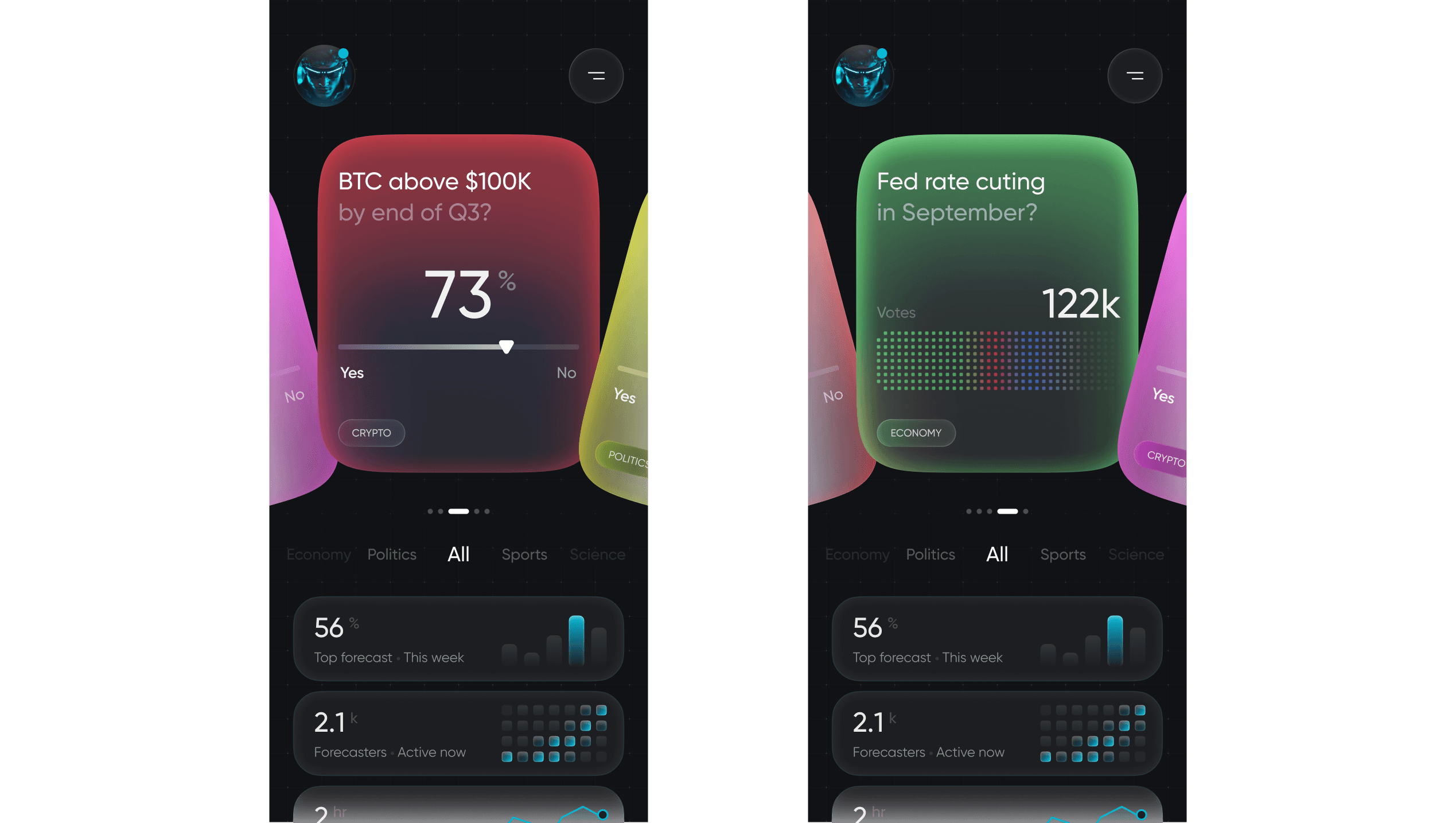
A market you can read at a glance
The feed leads with the forecast, not the order book — one probability per card over an ambient field tinted by category, so crypto, politics and sports read at a glance. A carousel surfaces what's hot; live stats and resolving markets keep it breathing without a wall of charts. Brand color does the work money does elsewhere: the signal you scan for is the read, not the payout.
Every angle before you call it
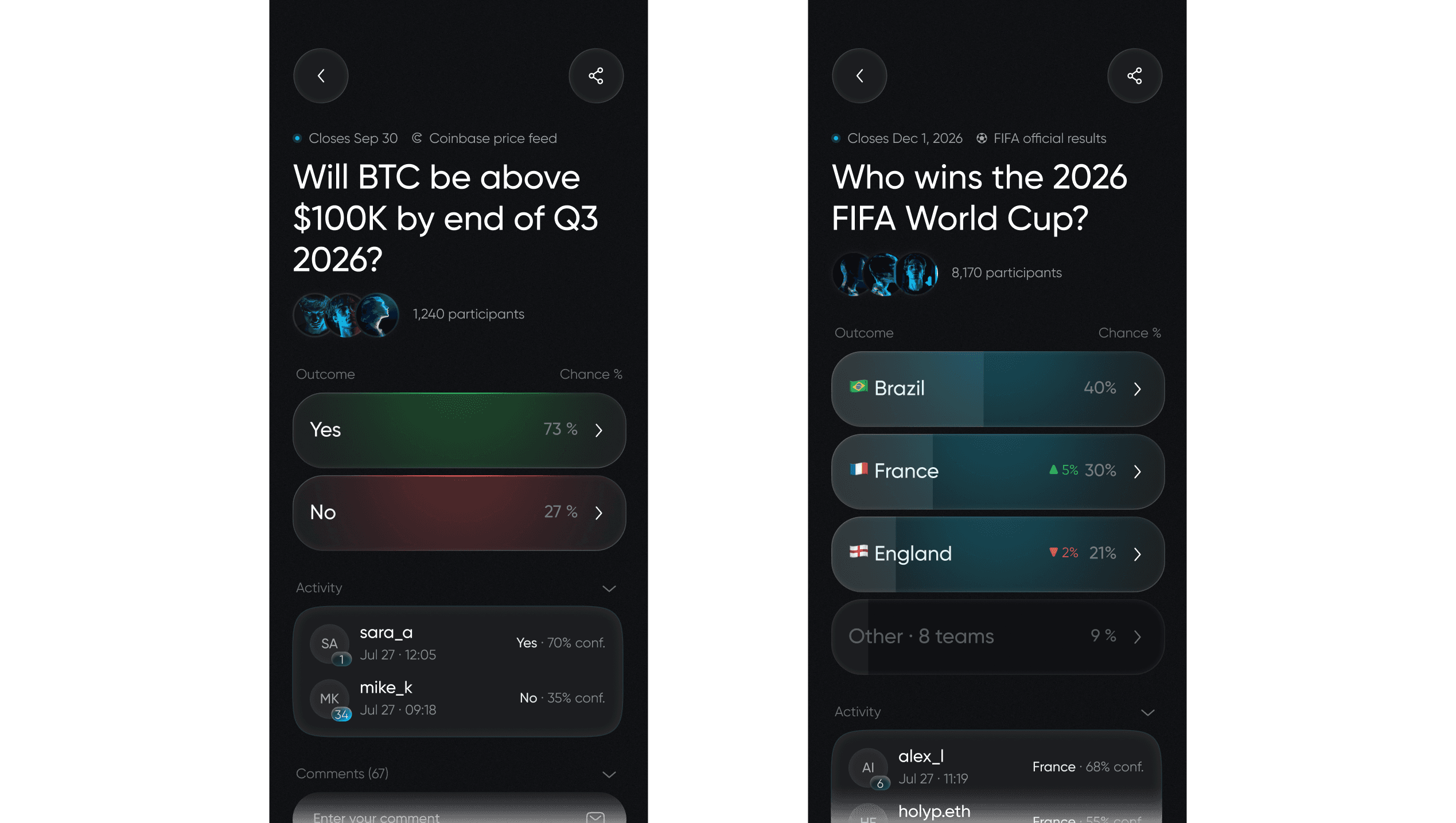
The hardest screen to keep clean — outcomes, live odds, social proof and resolution rules in one view. A binary market and a five-way race need different shapes: binary splits into two pills, multi-outcome ranks contenders with a pixel bar that trades precision for instant readability. One logic, two states.
Confidence is the input, calibration is the game
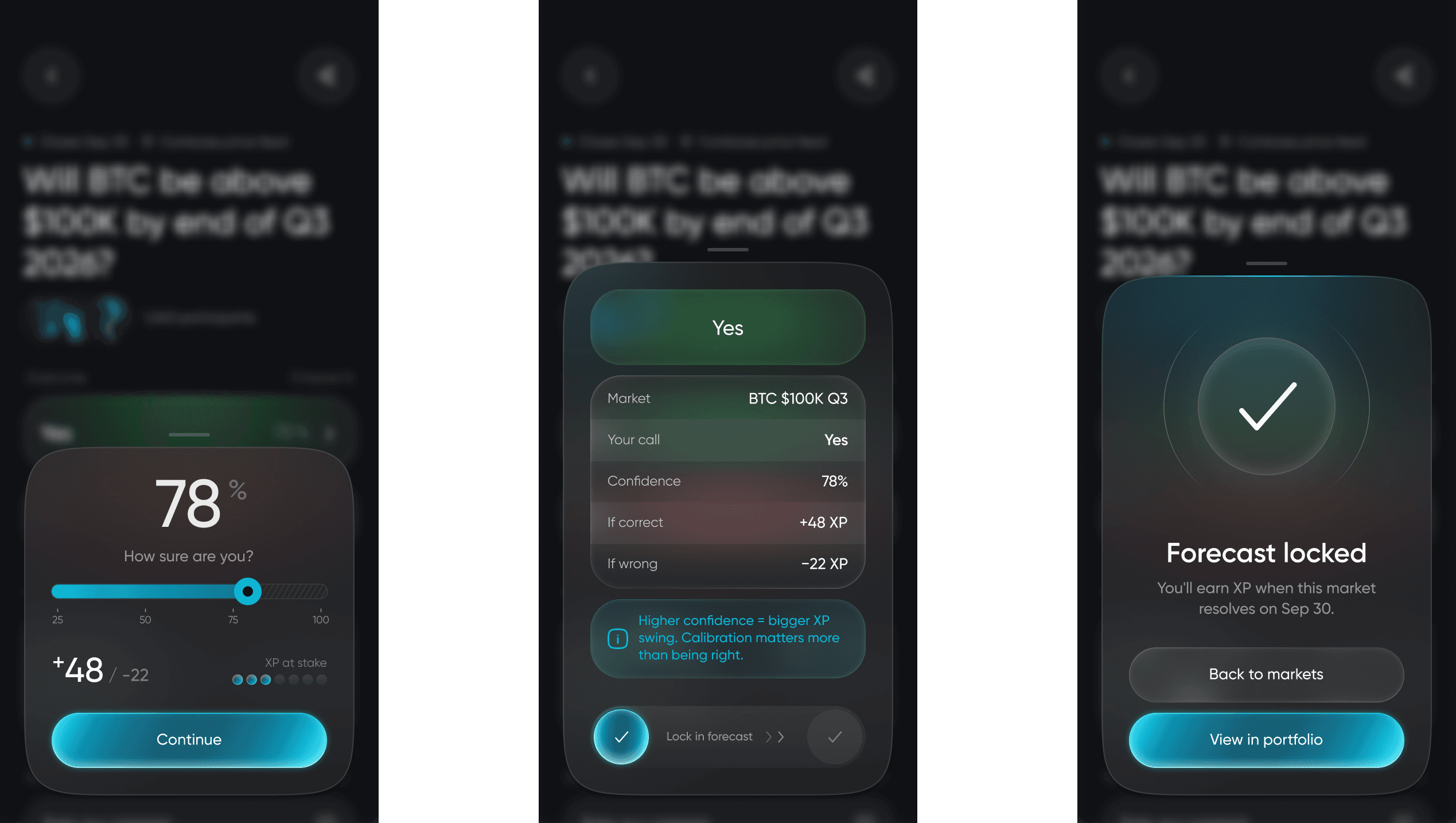
No money changes hands, so confidence is the stake. A 50→100% slider sets how sure you are; XP scales with it, non-linearly. Call it at 78% and you risk +48 against −22 — push to 95% and the swing widens both ways. Overclaim certainty you can't back, and the penalty bites. Three steps: set confidence, confirm, lock in.
A track record that proves itself
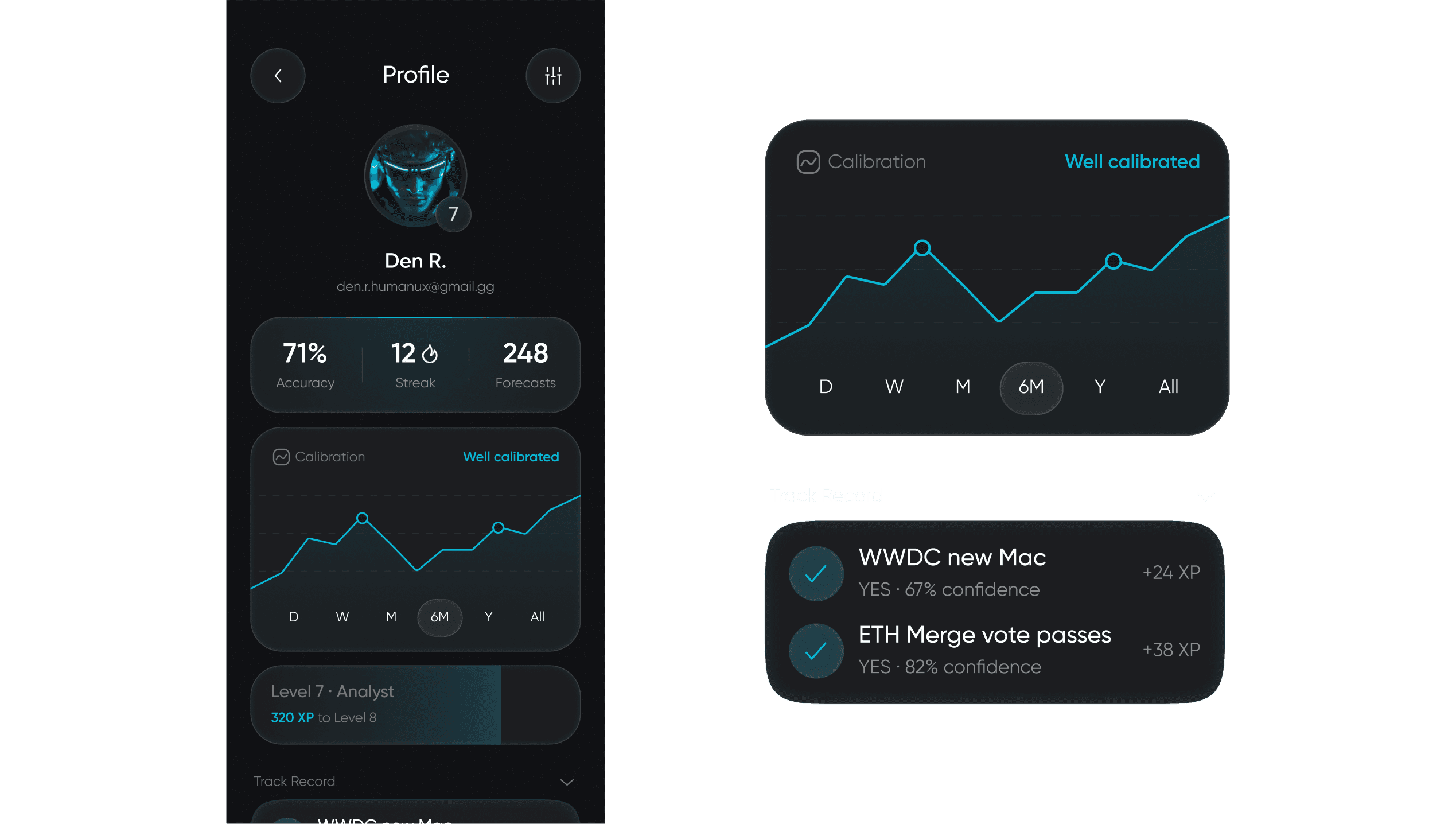
Reputation you earn, not buy. The calibration curve is the centerpiece — accuracy tracked over time, trending up, the one metric a bankroll can't fake. Around it: accuracy, streaks, league rank, and every past call won or lost. The record is the reward — and it's public.
From open call to settled record
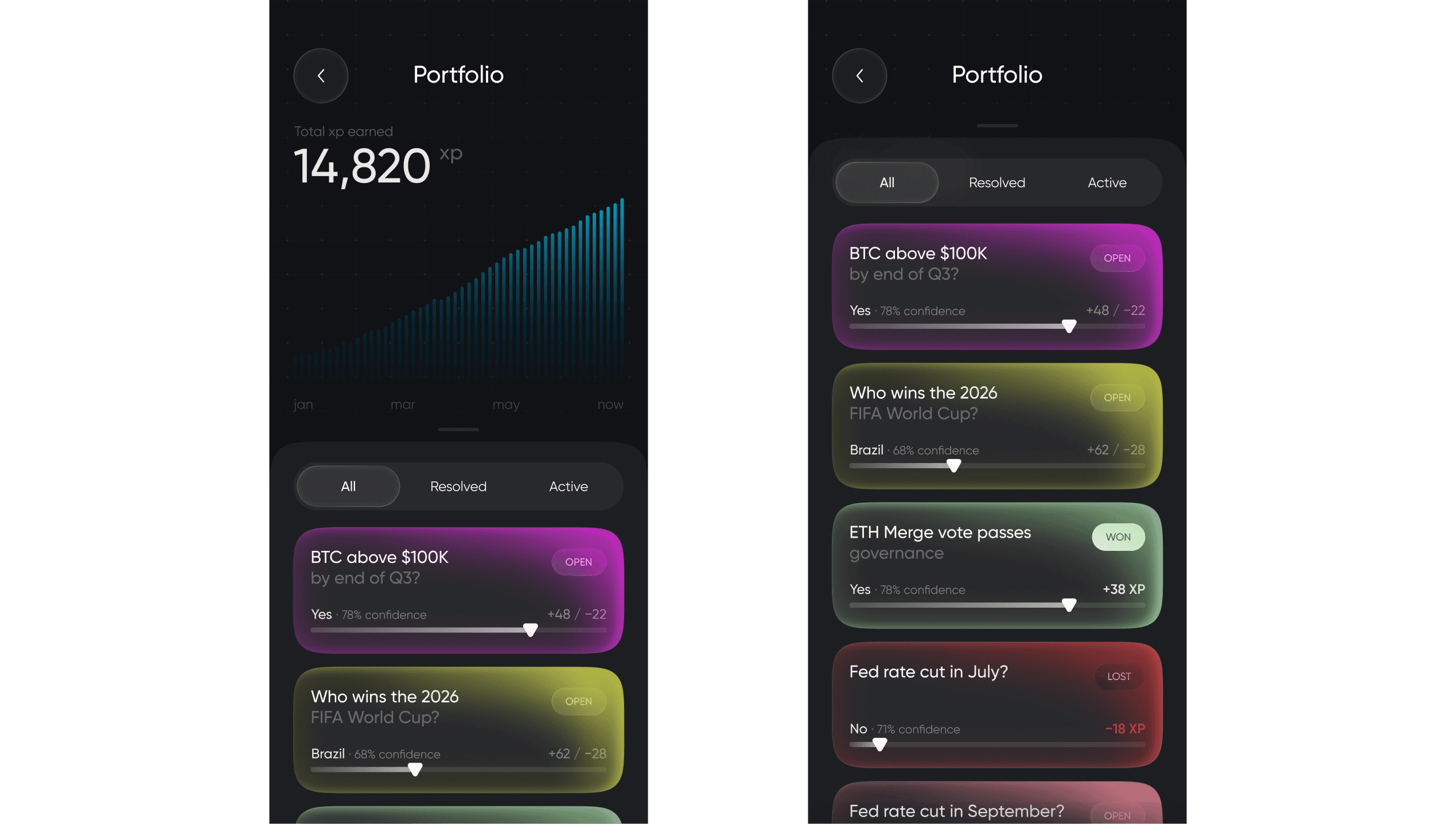
Every forecast lands here, visible end to end — active positions show your side, confidence and XP at stake; resolved ones settle green or red. No P&L, no balance: the hero number is total XP earned over time. A portfolio of judgment, not deposits.
First impression, on brand
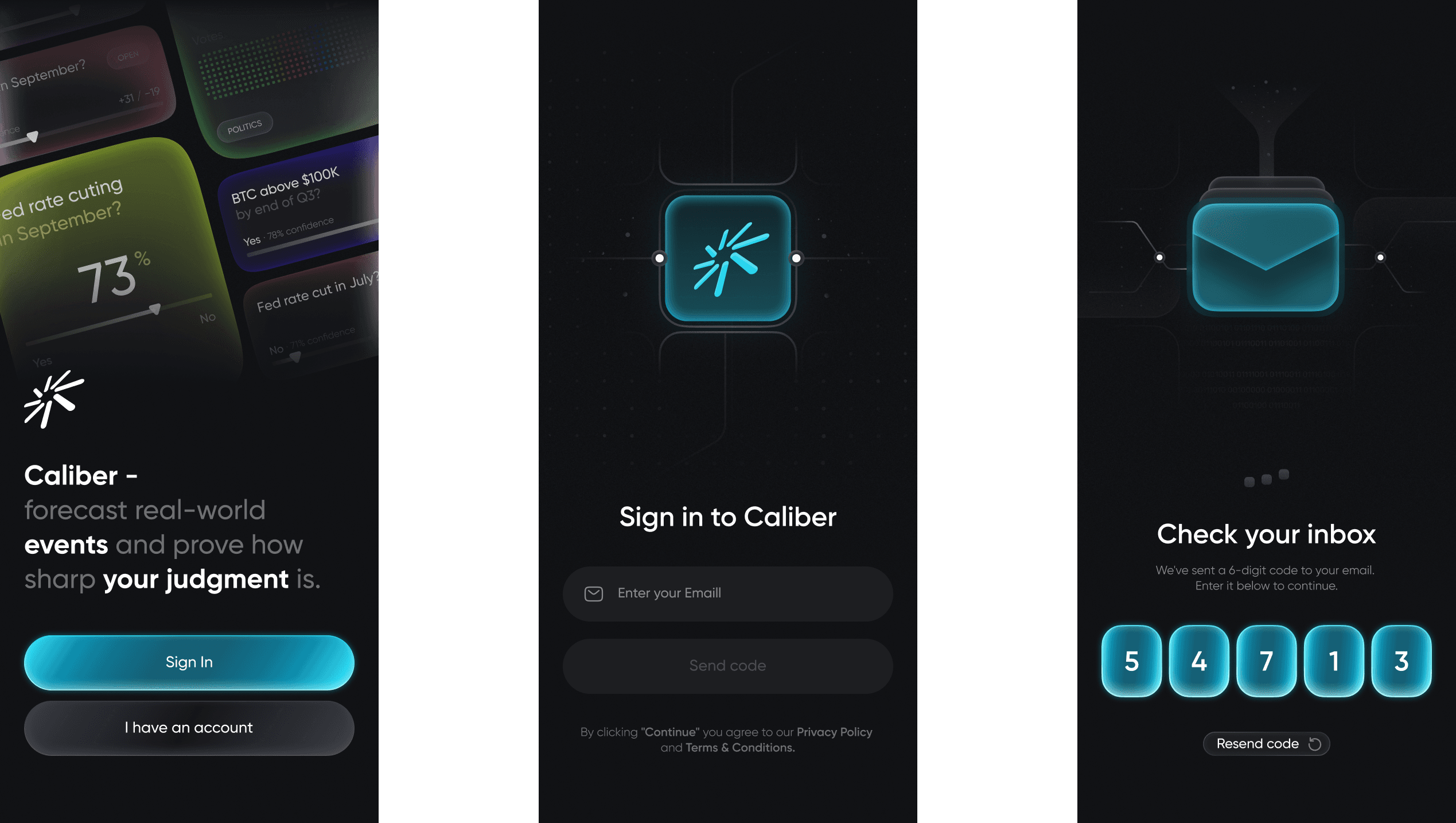
The entrance sells the product before the first prediction — the welcome screen reuses real market cards as a backdrop, so you see what Caliber does before signing up. Sign-in and verification carry a chip-and-circuit motif that ties back to the name: precision, signal, calibration.
One system underneath
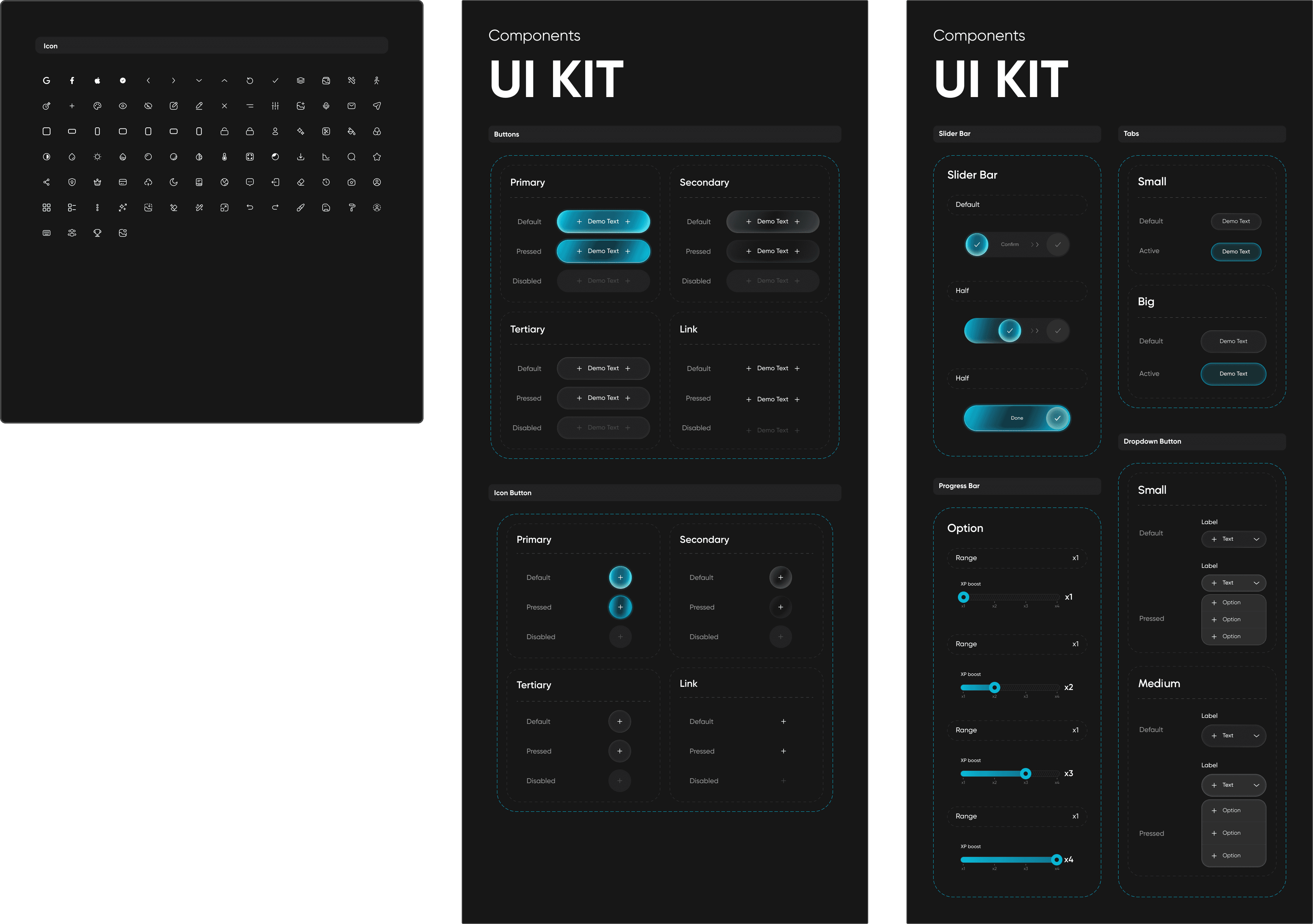
One foundation under every surface — color and spacing tokens, components carried through their state range. The palette rebuilds Nebula from green to a cyan ramp for brand and interactive use, while semantic green-red stays reserved for outcomes. The signature is the data layer — probability bars, pixel distributions, the confidence slider — all componentized. Identity that's structural, not decorative.
Why not just clone Polymarket
Because the money model is the ceiling. On Polymarket the line moves with capital — the richest position wins the narrative, and a sharp call from someone broke counts for nothing.
Caliber strips the cash out: you stake confidence, not dollars, and status comes from a calibration record that can't be bought. Same prediction-market core, inverted incentive — built for people tired of markets ruled by whoever deposits most.
year
2026
timeframe
4 weeks
tools
Figma
category
Self-initiated Concept
see also